Findings of an Afrobarometer survey showing divided perceptions on abolition of death penalty have resurrected debate on the issue with Malawi Government proposing consultations and some activists saying human rights should not be subjected to that.
In its June 2 2026 survey, Afrobarometer found that 50 percent of Malawians think there is no crime that justifies the death penalty while 48 percent said the death penalty is a fair punishment for people who have committed the most serious crimes, such as murder.
Ministry of Justice and Constitutional Affairs spokesperson Frank Namangale, in an interview with The Nation on the findings yesterday, said Malawi Government will maintain a moratorium put in place in 1994.
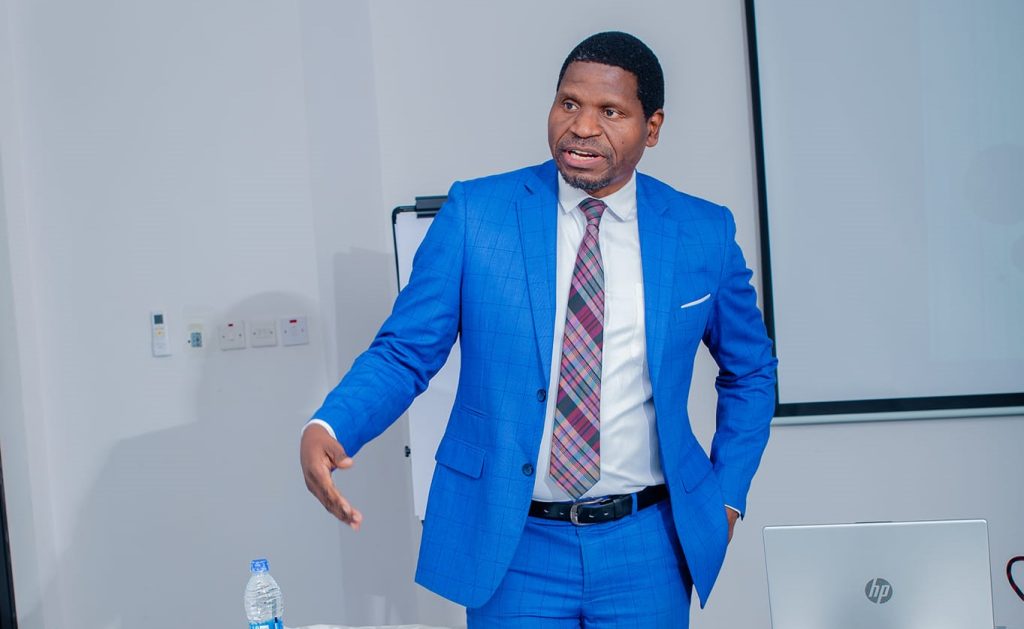
He said all persons who were previously on death row were given life sentences.
“National consultations on the abolition of the death penalty need to be undertaken in order to draw a national consensus on whether Malawi’s position on the matter will change or stay the same,” said Namangale.
In April this year, Parliament signalled readiness to act on the abolition of capital punishment if the government takes the lead in bringing a Bill.
First Deputy Speaker of Parliament Victor Musowa said at a stakeholders’ meeting in Lilongwe that lawmakers are open to scrapping capital punishment but stressed that progress hinges on coordinated advocacy led by the Ministry of Justice and Constitutional Affairs.
But in his reaction, Malawi Human Rights Commission (MHRC) director of political and civil rights Peter Chisi said the commission supports the 2015 Cotonou Declaration on abolition of death penalty in Africa.
He said that completely abolishing the death penalty does not require amending the Constitution, but changing the Penal Code.
Chisi said to ensure that the amendment is in line with government policy and position on the matter, the procedure has always been that the Minister of Justice should prepare and submit a Bill to Parliament.
He said: “In short, we support proposals for the complete abolition of death penalty in Malawi. The manner of the actual execution of the death penalty amounts to a violation of the right to human dignity.
“Abolition of the death penalty in Malawi will align our laws with the international legal framework on death penalty.”
Parliamentary hearings in 2022 found that 94 percent of respondents supported abolition while a 2018 study by Pasi and Cornell University showed that most traditional leaders in high-homicide areas also opposed the death penalty.
Commenting on the 48 percent perceptions in support of death penalty, Centre for Human Rights, Education, Advice and Assistance executive director Victor Chagunyuka Mhango said the trend demonstrates that public opinion remains divided but indicated that such is common in countries transitioning away from capital punishment.
However, he said human rights should not be subjected solely to majority opinion, arguing that the protection of fundamental rights, including the right to life and freedom from cruel, inhuman, and degrading punishment, is a constitutional and human rights obligation.
Mhango welcomed government’s position to maintain the de facto moratorium on executions but said a moratorium should be viewed as a transitional measure rather than a permanent solution.
He said: “The existence of the death penalty in law, even when it is not being implemented in practice, creates uncertainty and remains inconsistent with Malawi’s constitutional and international human rights obligations. As Chreaa, we appreciate the government’s call for national consultations to build consensus.”
In a separate response, human rights lawyer Alexious Kamangila said abolition of capital punishment was long overdue, urging that the Legal Affairs Committee of Parliament, MHRC and other human rights and criminal justice clinics should take the lead to push for abolition by end 2026.
The Malawi Supreme Court of Appeal in August 2021 clarified that Malawi never abolished the death penalty and that High Court judges are free to sentence murder convicts to death.
The initial assertion followed what the Judiciary described as “unperfected Supreme Court judgement” written by Justice of Appeal Dunstain Mwaungulu (retired) on behalf of his colleagues in April 2021 which held that the court had declared the death penalty unconstitutional.